Genetics of White Coloring in Felines
PDF Version
1 Overview
This paper will look at the genetics and appearance of white coats in felines. Unlike many of the other colors, the appearance of white is itself not a pigmented color but a covering/masking of a color. This subtle difference in the mechanism for how a cat may present the coloring leads to a rich depth of research. In the following text we will dive into the genetics mechanisms for displaying white, the unique developmental methods for which this is thought to occur, and how that is linked to health issues, as well as provide examples of how this functionally creates unique color variations though breeding.
2 Genetics
Let’s start by creating a foundational understanding of genetics so it can be understood how the change of a gene can affect the look of a cat. This all starts with chromosomes, DNA, and genes. Chromosomes are the big structure which contains / holds the DNA so that it can be neatly packaged in a cell. DNA is the complete instruction set, which is contained in every cell of the body, which defines who you are, and how to build you (it is your instruction manual). DNA then contains the genes, which is the specific unit, or singular instruction, of the instruction manual (Cleveland Clinic, 2022).
A gene is the unit of information where characteristics are stored (NIH, 2024). Genes are made up of DNA, the building blocks / instruction set which makes life. A fascinating part of genes is that they come in pairs. One is inherited from each parent. This is why not every person, cat, dog, or animal is an identical copy of each other. One copy of the gene is from the mother, while another copy is donated from the father. It is this combined pair which is necessary to function. In animals, the genes contributed by the female is held in the egg while the genes contributed by the male are held in the sperm. Through the act of copulation, these genes are combined to create a full instruction set and life.
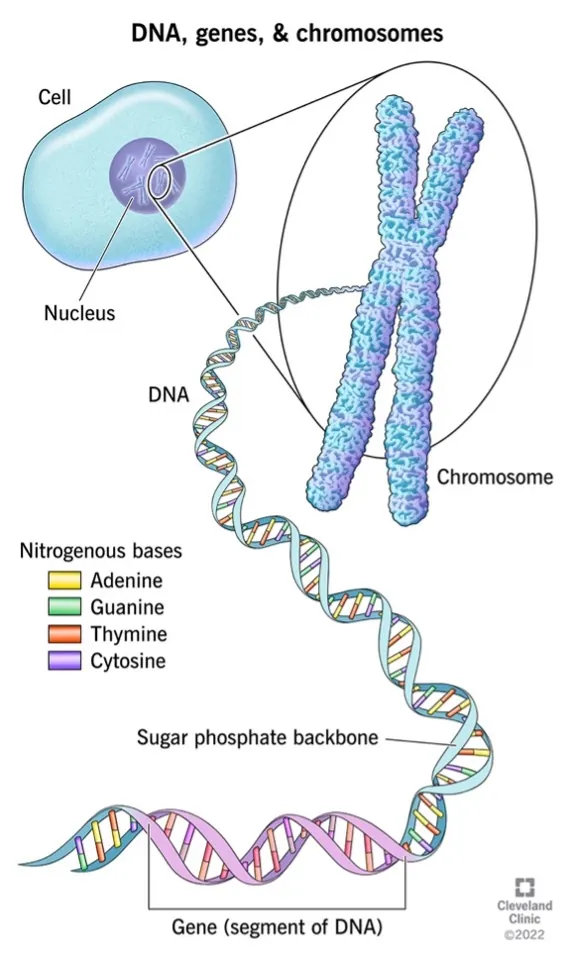
Genes contribute to everything which makes us unique; and by comparison, it is what makes your cat unique. An example of a specific gene would be the gene for eye color (it is actually a couple); one variation of these genes causes blue eyes, while another variation causes brown eyes. Variations in the gene which contributes to a change in the instruction set is called an allele. Different alleles give rise to slightly different instructions which produce a visible outcome. Alleles occur at specific parts of the chromosome; this position is called the locus. (Nature Education, 2014)
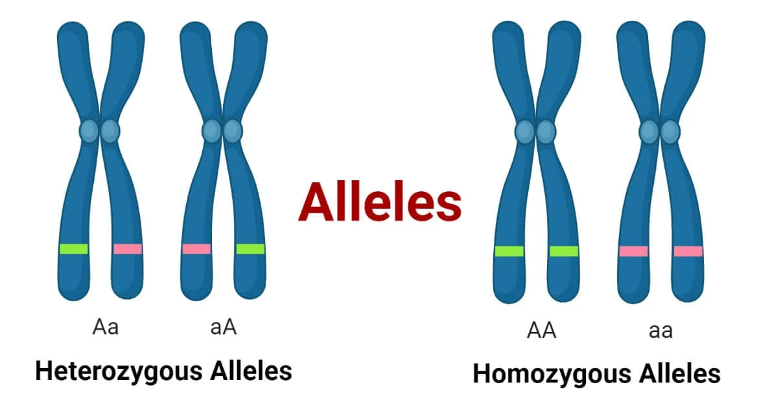
The two pairs of alleles define your genotype, or how your genes are defined. It can also present as your phenotype, or the observable characteristic as a result of a single or several genotypes.
A pair for chromosomes results in a pair of genes at a specific location (i.e. allele). When the gene pairs are the same, it is called homozygous. An example of this would be with the black female in Figure 3 with the o/o genotype on Locus O. By contrast when the gene pairs are different, it is called heterozygous. In the same Figure 3 above, this example would be the tortoiseshell, whose Locus O types are O/o.
3 Color Genes
3.1 Locus O
For the case of specificity, I am not saying a white cat does not appear white in color. I am saying that there is a gene (KIT) which has the capability to prevent pigmentation, and if the allele of this gene was different, then the cat could be fully colored. Let’s dive into this thought.
To understand how a gene can cover the cats color, let’s first discuss how cats get their colors.
Each parent (the Dam & the Sire) contribute one chromosome. If a cat has two X chromosomes (XX), it is a female; if it has one X and one Y, it is a male (XY). Furthermore, the Y chromosome does not have any color information. Color information is only contained on the X chromosome. The dam will contribute one X chromosome (since that is all it can contribute), and the sire will contribute either an X or a Y. If it contributes a Y, then the resultant kitten will have a chromosome pair of XY making it a male. If the father contributes an X chromosome, then the resultant pair will be XX, and the kitten will be a female. There are rare genetic abnormalities of XXY, but that is not discussed here. Since the sire only has one X chromosome, he can only be one color. This is why we see either black males or orange males but not tortoiseshell males (except in rare XXY cases). Females on the other hand have two X chromosomes, which alloWs for more options. They can be red, black, or tortoiseshell.
The specific type of color can be found at the Locus O on the chromosome X. An example of this is illustrated in Figure 3.
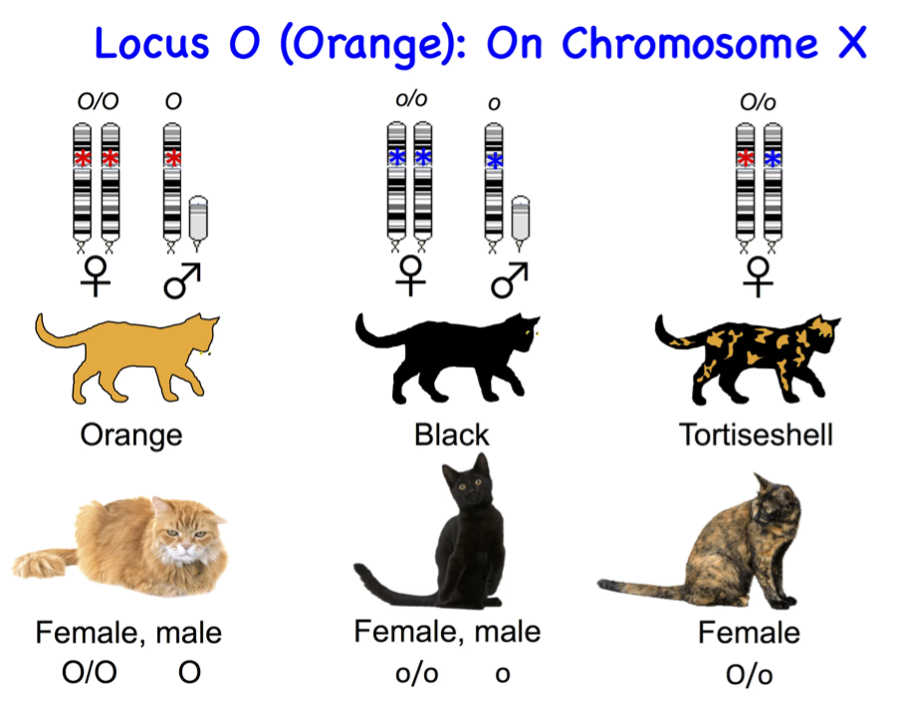
Note that white is nowhere to be found here because white is not an X chromosome-linked color. This is how the genotype of Locus O can define the color of a cat while the phenotype (observable) can be viewed as the color white.
3.2 KIT Gene
If you just read the previous paragraph and thought, “Woah, a white cat is not actually colored white,” then you would be correct. White is not actually a color (in the genetic definition); it is instead the inhibition, lack, masking, or covering of a color. A cat which appears fully white may be hiding black, orange, or tortoiseshell underneath (genetically speaking) when looking at the color gene (Locus O).
It is believed that the KIT gene controls dominant white and white spotting in cats. This is due to research on other animals, such as horses and mice, who also have the KIT gene. The KIT gene is a lot more complex than just white masking. The KIT gene also provides instructions for making of the tyrosine kinase receptor, which is critical in development and cell growth. As it relates to color, the KIT gene is part of the movement of melanoblasts (Gelling, 2014). Melanoblasts are precursors to melanocytes which produce melanin (pigmentation).
During early development of the embryo, the melanoblasts move from the neural crest (collection of stem cells which later forms into the central nervous system) out the extremities of the cat. It is thought, based on research in mice, that mutations of the KIT gene (which cause dominant white and white spotting) prevent the melanoblasts from surviving the migration to the extremities (Gelling, 2014). This lack of melanoblasts then inhibit the production of melanin and thus no color.
Now that the mechanisms are understood, we can take advantage of the cause-and-effect side of genetics. This means that even though the KIT gene does many, many other things, it can be characterized more specifically on how it functionally affects the genetic heredity of cats.
To do this we start with three standard alleles for the KIT gene:
- (1) N: Non-White / Wild-Type
- (2) WD: Dominant White
- (3) Ws: White Spotting
It should be noted that there are two other white alleles which will not be further discussed:
- (4) Wg: white gloves, only found in Birmans
- (5) Wsal: white salmiak, only found in Finnish populations of cats (Heidi, 2024)
The gene is autosomal dominant (NIH, 2025) meaning that a single copy of the gene (in this case WD) will show the white pattern. White can present the full range from only having white paws and chest to being full white.
If we go back to the standard types and knowing that WD is dominant over N/Ws and Ws is dominant over N, some simple expressions can be determined: (a) A cat will only not have white if its genotype is N/N. (b) If a cat is heterozygous (WD/*) or homozygous (WD/WD) for dominant white, then the cat will be all white. (c) If the cat is heterozygous (Ws/*) or homozygous (Ws/Ws) for white spotting, then it will have some expression of white. This may range from nearly full white to just a little.
3.3 Example 1 – Deuces x Roewe
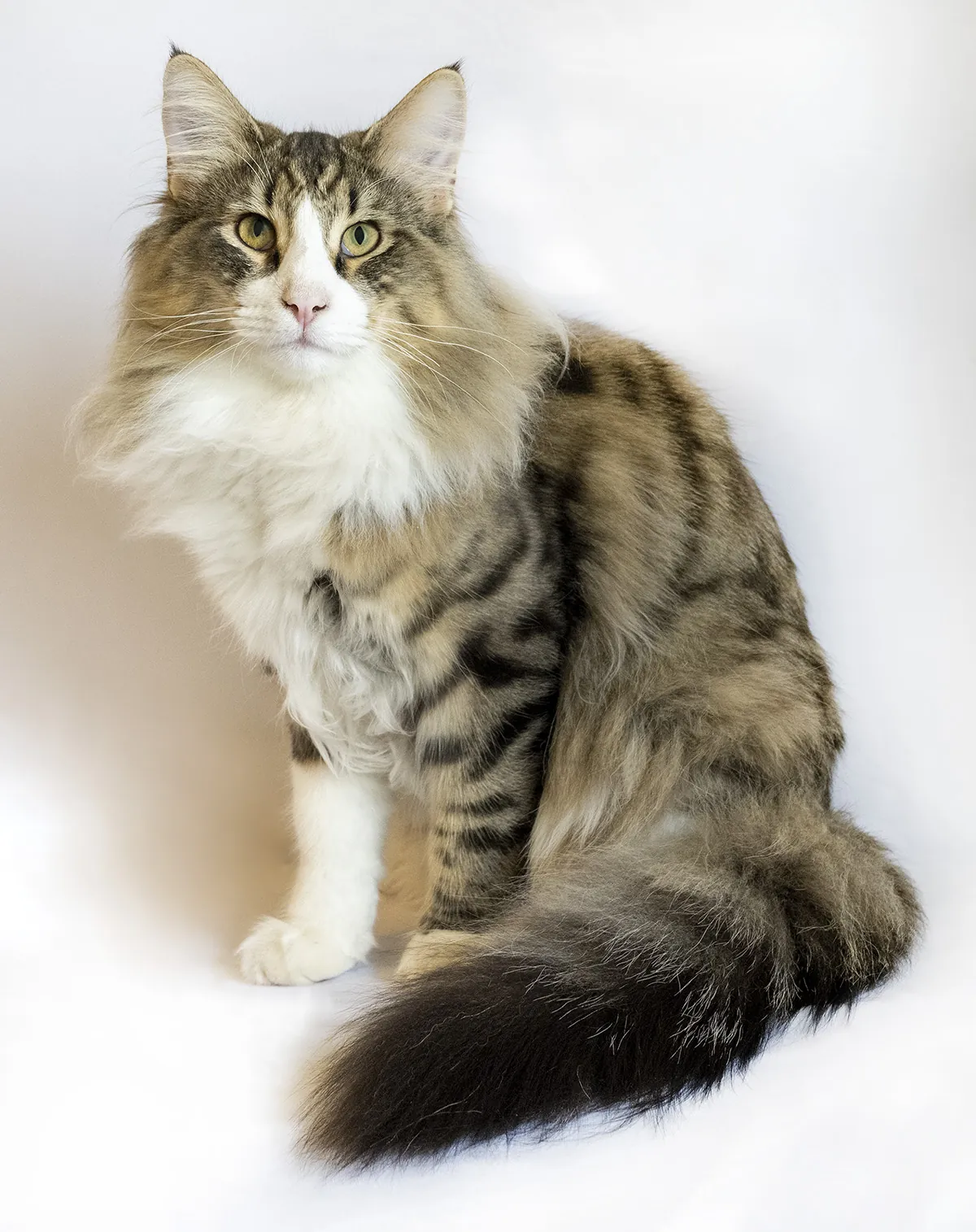
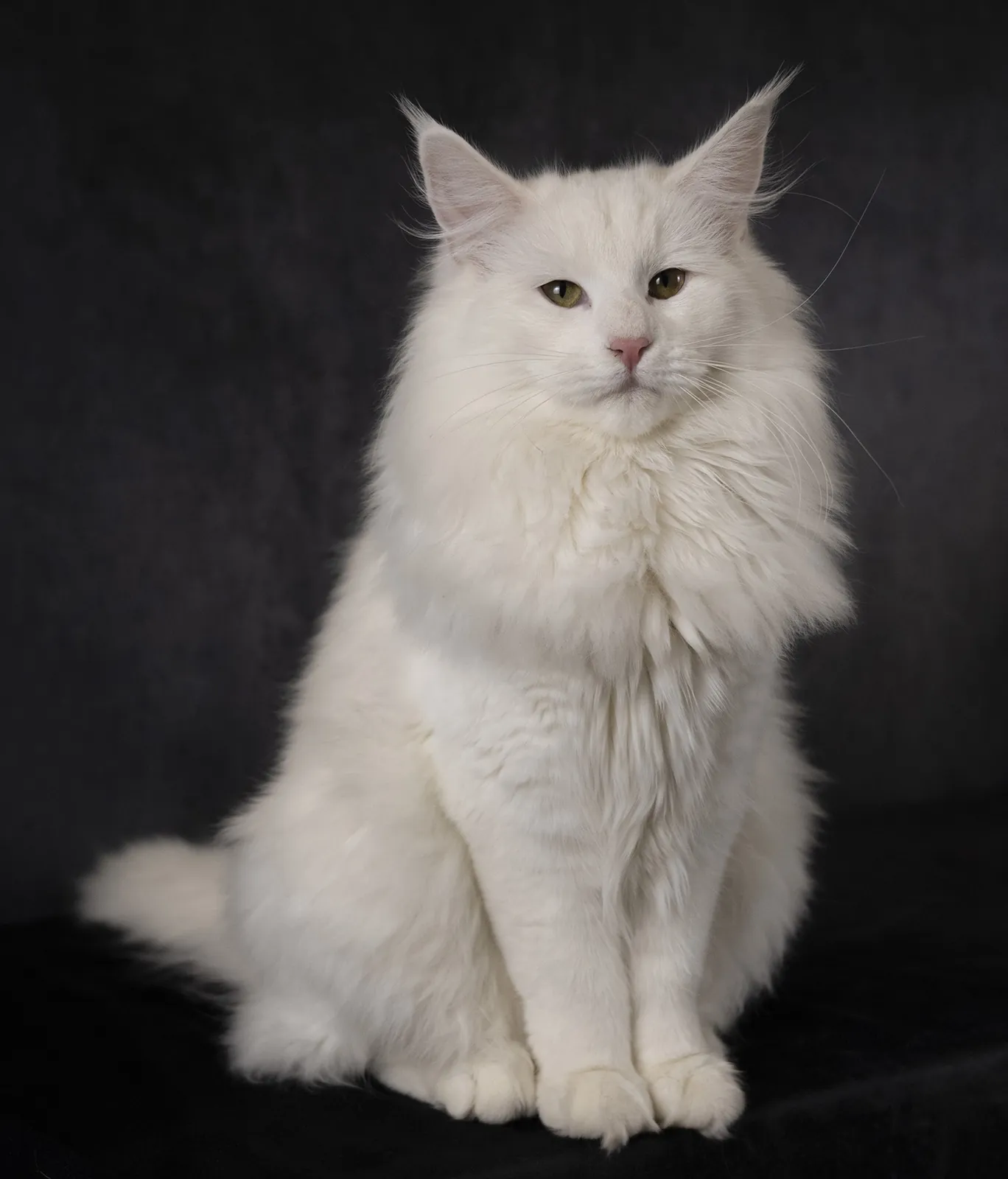
Now that we have a basic understanding of color genetics and white masking, let’s see some real-life applications with backed genetic tests. For these examples the cats will be shown in Appendix A. We have Sire 1 (Deuces are Wild) & Dam 1 (Roewe). Let’s look at a checkerboard mating diagram and see what our possible outcomes will be.
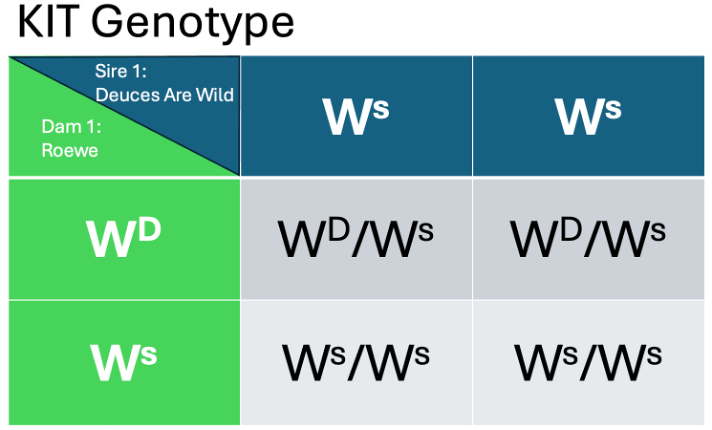
We can see that the outcome of this mating will be all kittens having some type of white, but more specifically it is expected that 50% are full white, while 50% are colored with white.
Next let’s try and deduce what colors can be created from this mating. We know that Deuces is a black male so will only have one X chromosome, which must be black (o). Roewe will be a little challenging. We know that both Rowen and Cassiopeia are results of this mating. Cassiopeia is black, but that does not narrow down if Roewe’s genotype could be tortoiseshell (O/o), red (O/O), or black (o/o). For this we must look back in her pedigree. Her mother was a tortoiseshell and therefore could have passed along a black or a red. Her father was white, but with a black mother; he must therefore be contributing a black. We therefore know that Roewe must be at least o/*.
The fact that Cassiopeia is black does not give us enough information to fully determine if Roewe is tortoiseshell under the white. Let’s write out the checkerboard to see why:
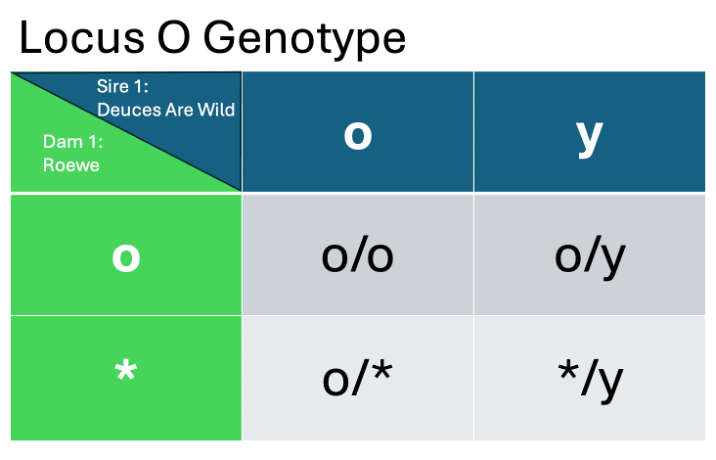
Here is some background on Roewe. She has had two singleton litters: the first consisting of Rowen, the second consisting of Cassiopeia. Based on her pedigree and her offspring, we have narrowed down the color gene. But what is very interesting is that we do not yet have enough data to determine if she is hiding red. What we do know is that 25% of her offspring will be black females, 25% will be black males. The other 50% could be split black females and males, or it could be 25% tortoiseshell females or 25% red males. I have not been able to find a test for the Locus O on the X chromosome, so the only way to determine is to look at future litters.
If we then couple this with the KIT gene analysis, we can see that this pairing has the possibility to produce a massive array of color options.
3.4 Example 2 – Norton x Garnet
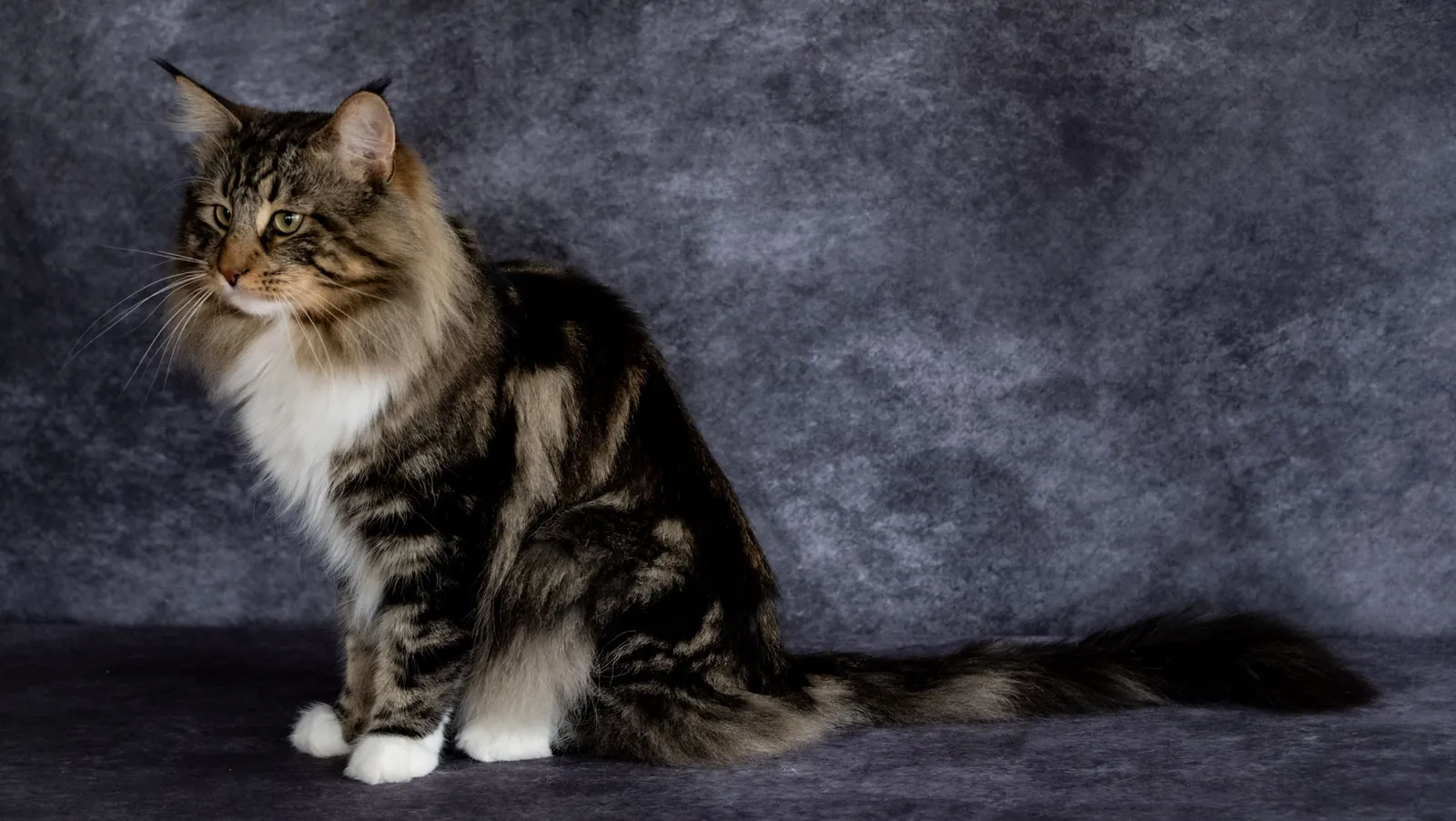
Let’s perform this same analysis on a mating between Sire 2 (Norton) and Dam 2 (Garnet). Norton is a carrier of white spotting, while Garnet does not carry any.
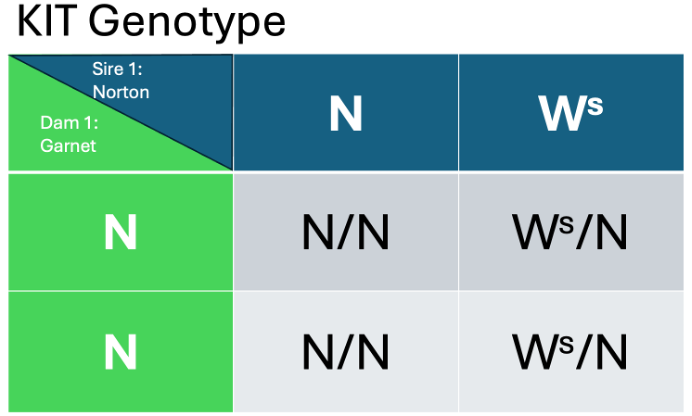
Looking at the KIT genotype it can be shown that the composition of expected litters is much different than the match in Example 1. In this match all kittens will be carriers of the wild type / normal coloring, with half the kittens showing no amounts of white. The other kittens, while carrying normal color, will still show signs of white spotting, which will present as patches of white amongst the base color.This result is consistent with the offspring produced (Litter Gamma).
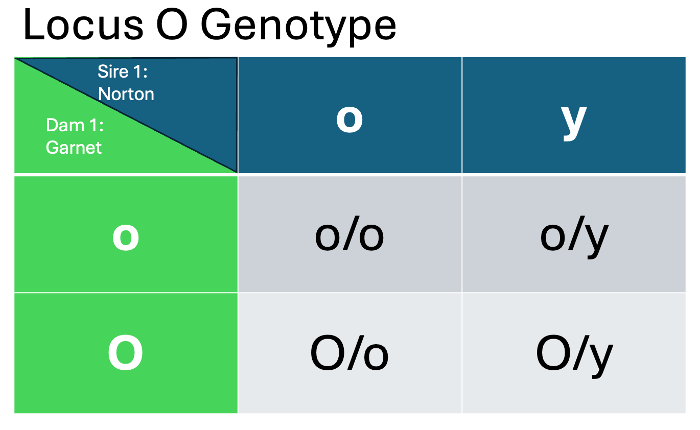
If next we look at the Locus O pigmentation, a broad variety of colors and types are produced. This is primarily due to the tortoiseshell coloring of Garnet. It is expected that 25% of the kittens will be black females, 25% will be black males, 25% will be red males, and 25% will be tortoiseshell females.
It should be noted that the statistics above are for large datasets. We know that Garnet can produce red kittens, but with the current 5 kittens she produced, we have had more than expected tortoiseshells and less than expected red kittens.
4 Health Issues
Health issues are one of the major issues which must be carefully understood when breeding all white kittens. There is enough statistical information to correlate the white covering with hearing issues. Heterochromia (different eye colors), or both blue eyes is common in full white cats.
4.1 Common Misconceptions
Before diving into the real health issues, lets first discuss some of the misconceptions about health issues related to white cats. These range from all white cats are albino’s, to all white cats are blind and deaf.
It is a common belief that all cats which are white are albino cats; however, the genetic mechanism for albinism is completely different than the white masking caused by the KIT gene. A whole separate paper could be written on albinism in felines, as it is a fascinating topic. Although albinism causes an all-white cat, the gene’s which cause albinism are not linked to deafness as is common with KIT gene / white masked cats (Hartwell, 2025).
One incorrect misconception is white cats with blue eyes are more prone to blindness. Statistical studies show that there is no increase to the likelihood of blindness when compared to a full-colored cat (Cornell Feline Health Center, n.d.). The white masking does affect the pigmentation in the eye but does not affect the functionality of the eye. It is more complicated with hearing as there are statistical correlations between deafness and blue eye color, discussed later in Section 4.3.
Another misconception is that a cat cannot be deaf if it does not have white masking blue eyes. Although, white masking causes an increased likelihood of deafness, it is also possible for non-white colored cats to have hearing or ear issues. When researching other common types of hearing disorders, there seemed to be one other congenital method with others resulting from some type of trauma. Cats with folded ears bred into the standard may face congenital deformations in ear structure preventing sound from reaching the cochlea (Cornell Feline Health Center, n.d.). Unlike with white masking caused deafness, which is a degradation of the cochlea, the folded ear structure can sometimes be surgically modified to return hearing.
Other methods of deafness include fighting, scratching, and infestation (i.e. ear mites). It is easy to study genetic abnormalities, but we must also remember that cats are predators. This leads to increased fighting for dominance (especially with intact males). Clawing and biting of ears is commons and can lead to infections, direct damage, or in-direct damage to the ear anatomy which decreases the ability to hear or causes complete deafness.
The final method we will discuss is cancer. Just like in humans, over-exposure to sun can cause polyps and squamous cell carcinoma (skin cancer). This typically starts at the tips and if caught early is treatable (Cornell Feline Health Center).
4.2 Eye Color
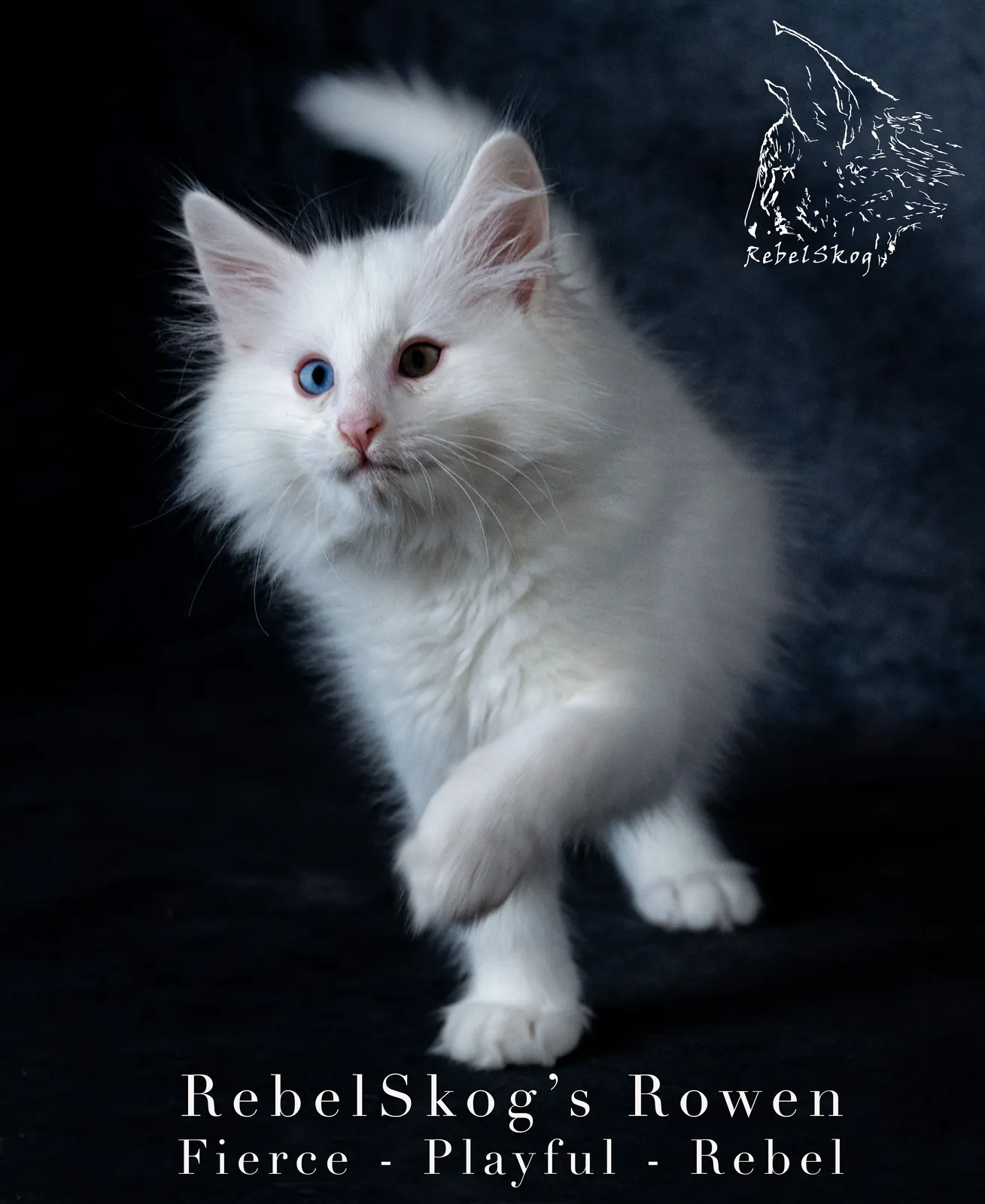
Heterochromia is when one eye is normal colored / pigmented while the other is blue. The expanded version of this is when both eyes are blue. In Norwegian Forest Cats, blue is not a standard eye color. What happens is cats with white masking (typically with Dominant White) carry that masking over the eye. This creates a lack of pigmentation on that eye and produces an odd-eyed effect. Rowen is a perfect example of this effect.
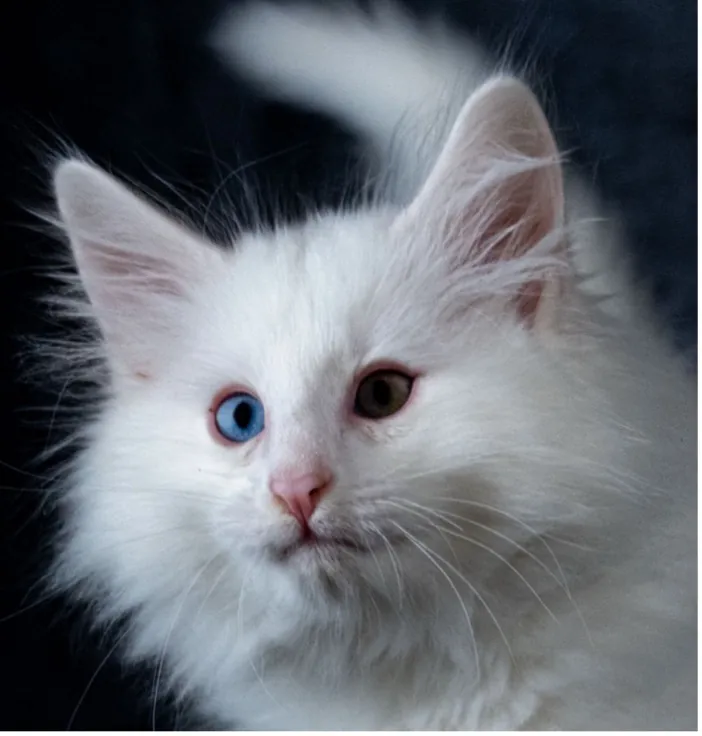
The downside to this beautiful effect is that there is a statically increased amount of these cats that have deafness.
4.3 Hearing / Deafness
Cats with Dominant White are inherently more at risk for deafness. Based on two independent studies, it was found that cats with homozygous dominant white (WD/WD) are between 52% and 96% likely to be deaf, while cats which are heterozygous (WD/Ws) are 27% as likely to be deaf (Mair, 1973) (Begsma & Brown, 1971).
Current theories, based on melanoblast and neural cell migration, outlined in Section 3.2, do not provide a clean description of how deafness is associated with white coloring, but the breeding statistics do show a direct correlation. For more information, and an excellent description on how the melanocyte affects the ear structure, read the paper by (A van Beelen, et al., 2020).
The genetic study on melanocytes in the ear have also been greatly studied in humans. The results have been found to translate to other mammals (such as felines). These studies have found inner ear melanocytes are critical to functional hearing whereby “sensorineural hearing loss and vestibular disorders can be associated with anomalies of pigmentation (A van Beelen, et al., 2020)”. The result of the lack of surviving melanoblast’s result in a degeneration of the cochlea (the part of the inner ear which hears) (Olsson).
Those who breed white cats must take this knowledge into account. It is not recommended to breed two cats which each contain at least one homozygous dominant white (WD) gene. This significantly increases the statistical likelihood of having a homozygous dominant white cat with health issues. In some cat clubs, such as FIFe, two white cats are not allowed as part of the club bylaWs (FIFe regulation 3.6.4). Other cat clubs, such as TICA, only advise against the practice. Breeding a heterozygous dominant white (WD/Ws) with another heterozygous or homozygous white spotting (Ws/Ws or Ws/N) will result in fewer full white cats in a given litter but also significant decrease the risk of deafness due to homozygous dominant white offspring.
If a full white cat is to go into breeding, or white is masking eye pigmentation, it should undergo a BAER (Brainstem Auditor Evoked Response) test. This test does not determine if the cat can hear but instead looks at the functionality of the auditory canal. A small electrode is placed on the scalp and stimulus is played through the ear. Electrical responses from the brain are measured. If the response is flat then the cat is most likely non-hearing, if the responses are as in Figure 8 with long oscillations around the centerline, then the feline is capable of hearing.
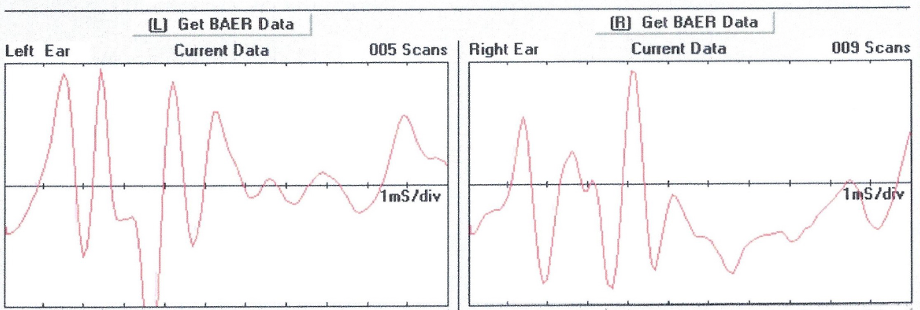
Finally, it is important to look at the likelihood of hearing problems. It is not as simple as saying that if the cat is white and has blue eyes then it will be deaf. Or that if one eye is blue then that side will be deaf. As an example, Rowen, in Figure 8, has one blue eye but is full hearing. The statistics about the risk of deafness, based on genotype, was given in the opening paragraph of this section. Let’s revisit those numbers and the numbers of based on a combination of genotype and phenotype, compiled into Figure 10.
| Type | Risk of Deafness |
|---|---|
| WD/WD | 52% - 92% |
| WD/Ws 1 | ~27% |
| Two Blue Eyes | 60% - 80% |
| Single Blue Eye2 3 | 30% - 40% |
| No Blue Eyes2 3 | 10% - 20% |
1 Referenced from (Begsma & Brown, 1971) & (Mair, 1973)
2 With White Masking Genes (WD or Ws)
3 Referenced from (Hartwell, 2025)
With the information provided on the empirically collected data from genetic studies and breeding studies we can draw some interesting correlations. Cats that are homozygous WD are also most likely to have hearing loss. Cats that have two blue eyes also have increased hearing loss. It is more likely for a homozygous WD to have two blue eyes, but it is not required. Heterozygous WD/Ws have less chance of hearing loss, but regardless of whether single blue eye or no blue eyes remain at risk for hearing loss.
The result of these statistics should not alarm buyers or breeders but should instead inform them on the risks of such a unique cat; and in the case of breeders, act as guidance on how to decrease the risk of deafness.
5 Conclusion
Color genetics of felines are exceedingly interesting. The way in which different genes express themselves during the growth process (as early as the embryonic stage) can affect the total outcome of how a cat appears. Studying the hereditary makeup of a breeding program is critical in understanding the outcome of breed characteristics. As we saw in our examples, the genotype color may be black (or red, or tortoiseshell), but the phenotype (observed color) may be white. We found that the reason for this is that the color white is not part of the pigmentation Locus O, but instead a masking of color as controlled by the KIT gene. This gene has a massive effect on more than just external color, and can cause some unique health issues, specifically deafness. Understanding how these different genetic principles affect the functional outcome of the cat is critical in maintaining a safe and defect-limited breeding program.
APPENDIX A
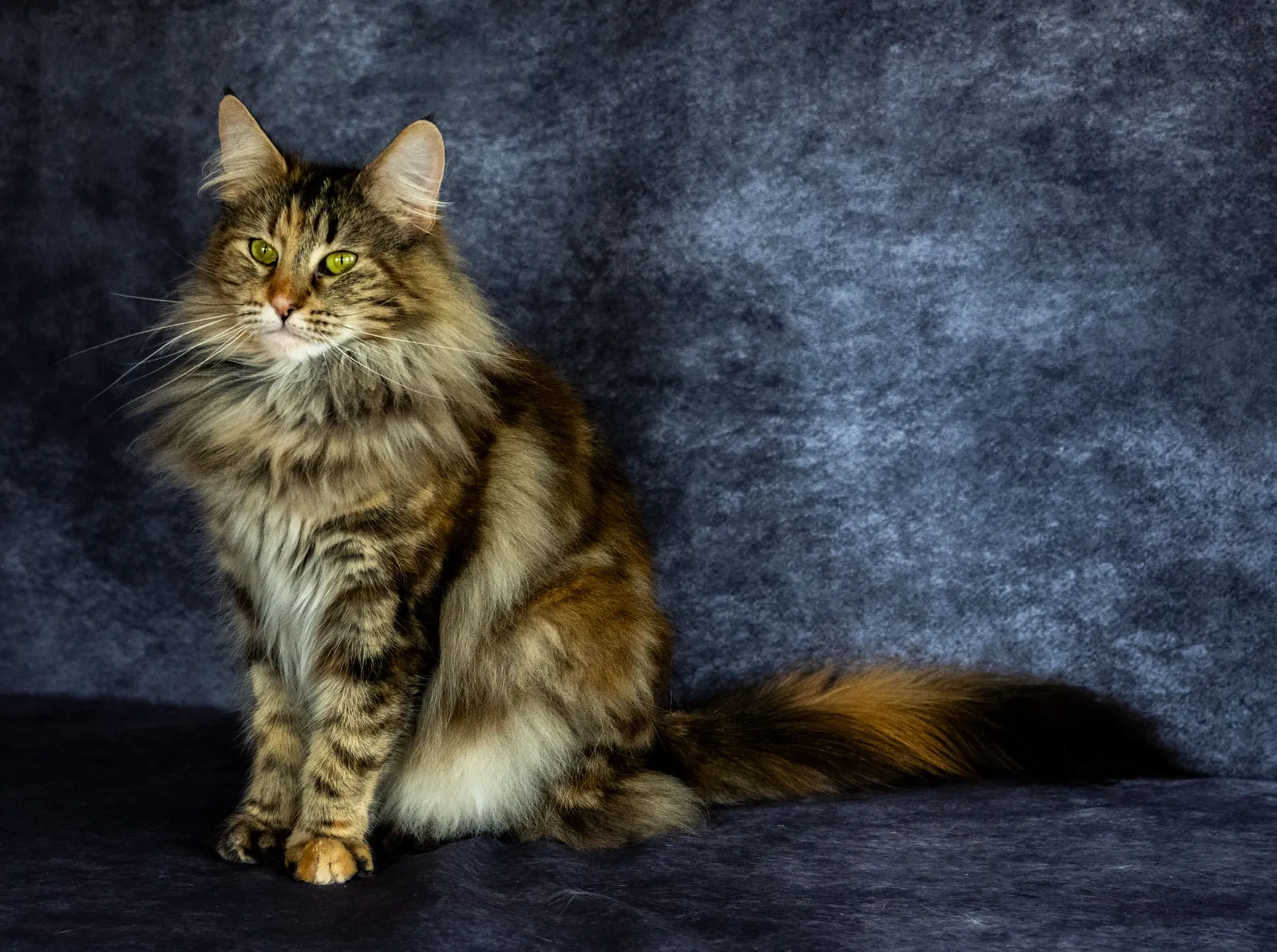
Sire 1: Deuces Are Wild
- EMS Code: NFO n 03 24 (Black Spotted Tabby & White)
- Locus O: oy
- KIT: Ws/N
- ASIP (Agouti): A/A
- Dilution (MLPH): D/D
Dam 1: Roewe
- EMS Code: NFO w (White)
- Locus O: o/*
- KIT: WD/Ws
- ASIP (Agouti): A/A
- Dilution (MLPH): D/D
Sire 2: Norton Dominator
- EMS Code: NFO n 09 22 (Black Classic Tabby & White)
- Locus O: o/y
- KIT: Ws/N
- ASIP (Agouti): A/A
- Dilution (MLPH): D/D
Dam 2: Garnet
- EMS Code: NFO f 22 (Black Classic Torbie)
- Locus O: Oo
- KIT: N/N
- ASIP (Agouti): A/A
- Dilution (MLPH): D/d
Offspring 1: Rowen
- EMS Code: NFO w (White)
- KIT: WD/Ws
Offspring 2: Cassiopeia
- EMS Code: NFO n 03 24 (Black Spotted Tabby & White)
- KIT: Ws/*
References
- A van Beelen, E., H van der Valk, W., MJ de Groot, J., Hensen, E., Locher, H., & G van Benthem, P. (2020). Migration and fate of vestibular melanocytes during the development of the human inner ear. National Library of Medicine.
- Begsma, & Brown. (1971). White fur, blue eyes, and deafness in the domestic cat. Journal of Heredity.
- Cleveland Clinic. (2022). DNA, Genes & Chromosomes. Retrieved from Cleveland Clinic
- Cornell Feline Health Center.Ask Elizabeth: White Cats and Blindness/Deafness. Retrieved from Cornell Feline Health Center
- Cornell Feline Health Center. Feline Ear Disorders. Retrieved from Cornell Feline Health Center
- Cornell Feline Health Center. Squamous Cell Cancer: Dangerous. Retrieved from Cornell Feline Health Center
- Dewangan, N. (2023). Alleles: Definition, Types, Features, Applications. Retrieved from Microbe Notes.
- Gelling, C. (2014). How the cat got its spots (and hearing problems). Retrieved from Gene to Genomes.
- Hartwell, S. (2025). WHITE CATS, EYE COLOURS AND DEAFNESS.
- Heidi, A. (2024). A new Finnish flavor of feline coat coloration, "salmiak," is associated with a 95-kb deletion downstream of the KIT gene. Retrieved from NIH
- LabgenVet. (n.d.). Cat Genetics 2.0: Colours.
- Mair. (1973). Hereditary deafness in the white cat. Acta Otolaryngologica Suppl.
- Nature Education. (2014). Allele. Retrieved from Scitable by Nature Education
- NIH. (2024). What is a gene? . Retrieved from MedlinePlus
- NIH. (2025). Retrieved from National Human Genome Research Institue
- Olsson, U. Genetics. Retrieved from PawPeds